A recent post on X about creatine and potential benefits for Alzheimer’s patients had me interested enough to do some research. What I found was a clinical study that might-be-something/might-be-nothing, a supply chain that’s a policy disaster, and a DoD contract that kind of pisses me off.
This is what I put together.
There is a Real Demand Case — Regardless of Whether the Alzheimer’s Signal Is Real
There are at least 4 growth vectors that make creatine interesting:
Cognitive health — the signal that changes the calculus. Let’s start with the study that caught my attention. Researchers at the University of Kansas gave twenty Alzheimer’s patients 20 grams of creatine monohydrate per day for eight weeks. Alzheimer’s patients are supposed to deteriorate. These patients improved — across four cognitive measures, with statistical significance on three of them.
The limitations are real. n=20, no control arm. You cannot cleanly separate a creatine effect from natural disease progression, placebo response, regression to the mean, or test-retest familiarity. The statistical significance is genuine but fragile at this sample size.
The signal is also real, though. The median is moving up in a population where it should be moving down. Prior creatine trials in Huntington’s and ALS showed nothing — but those are motor-dominant diseases. Alzheimer’s is fundamentally an energy metabolism disease. Creatine is an energy metabolism molecule. The mechanistic fit is tighter here than it was in the trials that failed. If a 200-300 patient Phase 2 study reproduces this with a proper control arm, creatine enters clinical channels for cognitive decline virtually overnight — it’s cheap, safe, has thirty years of safety data, and requires no FDA drug approval. That inflection point is probably three to five years away. The window between now and then is where this thesis lives.
GLP-1 co-therapy. Forty million Americans are on or about to start GLP-1 drugs. These drugs work. They also cause muscle loss alongside fat loss, and every major endocrinologist and sports medicine physician is now recommending creatine as the standard co-therapy. That’s a medically-directed demand channel that didn’t exist three years ago. When physicians recommend something through clinical channels rather than supplement retail, the quality and sourcing requirements change entirely. Seems big.
Longevity mainstreaming. Creatine is transitioning from supplement to something closer to a semi-essential nutrient. The EU has approved health claims. Women are now a major adoption cohort. The global market is projected to reach $4.7 billion by 2034 from $0.7 billion today — a 6x expansion over ten years — and clinical adoption hasn’t begun.
Performance cognition. A meaningful share of developers, founders, and operators are already taking creatine specifically for cognitive performance. The research supports it: creatine improves brain energy metabolism in healthy adults with documented effects under stress and sleep deprivation. This is quietly standard practice in knowledge-worker culture.
Any one of these forces would merit attention. All four converging simultaneously against the same supply chain is the setup.
The Tough Problem - Supply
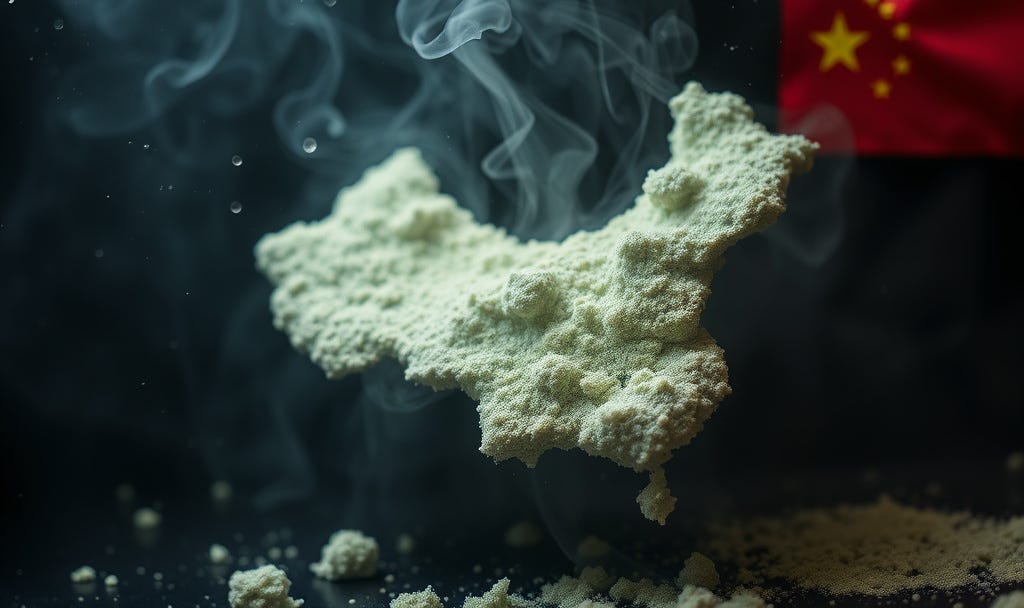
China controls roughly 80% of global creatine production. That’s not concentration — it’s near-total dependence on a single geopolitical adversary for a molecule that physicians are beginning to prescribe.
The immediate problem is quality. Peer-reviewed analysis of Chinese-sourced creatine has documented contamination with up to 5.4% dicyandiamide, 0.09% dihydrotriazine, 1.3% creatinine, dimethyl sulfate, thiourea, and elevated heavy metals including mercury and lead. These are the byproducts of different chemical precursors, poorly controlled synthesis, and inadequate filtration. Dihydrotriazine is structurally related to known carcinogens. The established tolerable daily intake for dicyandiamide is 1 mg/kg body weight; some analyzed products exceed 50 mg/kg concentration. This is not hypothetical — it’s documented contamination in products on shelves now.
The larger problem is structural. In 2021-2022, Chinese factory restrictions and trade friction moved creatine from ~$5/kg to ~$42/kg — an 8x spike on sports nutrition demand alone. Clinical demand hasn’t materialized yet. When it does, the 2021 price event is the preview of what supply disruption looks like, not the main event.
The contamination problem, on its own, has a policy solution: raise FDA import standards, require pharmaceutical-grade documentation for clinical channels, let China meet the bar or lose the market. Regulation solves quality without requiring domestic manufacturing.
The concentration problem is different. When 80% of supply sits in a single adversarial country and clinical demand arrives on top of existing sports nutrition demand, the 2021 price spike is the preview, not the main event. How that concentration became permanent — and what it actually means — is a longer story.
Why There Is No US Domestic Producer
The chemistry is not the barrier. Creatine monohydrate is synthesized from sodium sarcosinate and cyanamide — two precursors combined in reactors at 60-80°C, with creatine precipitating as water is added, then crystallizing, filtering, drying, and milling. The process is well understood and has been for decades. China’s dominance is not a function of technical complexity. It’s the outcome of deliberate industrial policy, executed over twenty years and ratified by American legislative decisions that have never been accounted for.
China dumps the US industry out of existence. Through the 1990s, China’s state-subsidized manufacturers — backed by government capital, subsidized loans, and effectively zero environmental compliance costs — flooded the US market with creatine priced below fair value. This was not market competition. It was an industrial policy campaign. The domestic US creatine industry, which had existed and served the early bodybuilding market, was systematically undercut until it ceased to function.
One company fights back — and wins. Pfanstiehl Laboratories of Waukegan, Illinois filed an antidumping complaint in February 1999. The ITC investigated and found unanimously that the US industry had been materially injured. On February 4, 2000, the Department of Commerce issued an antidumping duty order. The PRC-wide dumping margin was 128.63% — Chinese manufacturers had been selling creatine into the US market at less than half the cost of production.
Congress opens the floodgates anyway. Three months after the antidumping order was issued, the House passed the United States-China Relations Act, granting China Permanent Normal Trade Relations status. Clinton signed it. China joined the WTO in December 2001. What followed, across sector after sector including specialty chemicals, was Chinese state-subsidized production operating with structural cost advantages no American company could match: externalized environmental costs, government capital support, accumulated scale, and control over precursor supply chains.
The protection lapses because there is nobody left to defend it. Antidumping orders require a five-year sunset review — the domestic industry must affirmatively request renewal or the protection is revoked. In 2005, the Department of Commerce initiated that review. No domestic party responded. The US creatine industry had been eliminated so thoroughly that there was no one left to file. On April 4, 2005, the order was revoked. Chinese creatine returned at standard tariff rates. The window Pfanstiehl had fought to open closed permanently.
Tariffs since have not changed the underlying calculus. Recent SCOTUS ruling notwithstanding, import rates on creatine range from 3.7% to 25% and are moving higher, but tariffs raise prices without building plants. The structural economics never recovered because no premium market segment, nor government subsidy, existed to justify rebuilding against Chinese commodity pricing. That premium segment is now arriving, twenty years after the industry was destroyed. And so is the subsidy.
There Is One Non-Chinese Producer
One company produces pharmaceutical-grade creatine monohydrate outside China: AlzChem Group, headquartered in Bavaria, Germany. Their branded product — Creapure — has been the quality standard used in virtually all serious clinical research on creatine, precisely because researchers required certainty about what they were administering to subjects.
The moat is not the reaction chemistry, which is well known. It is purification, impurity documentation, and — most importantly — vertical integration into precursor inputs. AlzChem manufactures their own cyanamide and sodium sarcosinate rather than sourcing them externally. That means control over input pricing, supply continuity, and the full quality documentation chain from raw material to finished product. When creatine enters clinical prescription, the HCP channel — physicians, hospital systems, compounding pharmacies — will require exactly this: pharmaceutical-grade purity with auditable provenance from precursor to finished ingredient. AlzChem is built for that specification. No other Western producer is.
Their stock has appreciated 560%+ over the past three years. Their current €120M capacity expansion is deepening vertical integration further - and the same US government that sold out the domestic producers are now funding their plant in the US.
Why the DoW (frm DoD) Is Funding This German Company — And It Has Nothing to Do with Health
The US Department of Defense War has committed $150 million to help AlzChem build a US manufacturing facility. The commitment is not specifically for creatine. It is for nitroguanidine — a propellant compound used in artillery shells, triple-base ammunition, and airbag inflators. AlzChem is one of the only non-Chinese producers of pharmaceutical-grade nitroguanidine, and the DoW needs a domestic source. The structure is a preliminary contract: AlzChem identifies a suitable US site, and the DoW pre-commits the capital to build by end of 2029.
Nitroguanidine and creatine monohydrate share the same upstream chemistry — same precursor infrastructure, same NCN chemistry platform, same core manufacturing competency. A US nitroguanidine facility built with DoD capital is structurally a beachhead for US creatine monohydrate production from the same company. The manufacturing infrastructure, regulatory relationships, and domestic precursor supply chain transfer directly. Most analysts are treating this as a defense subsidy. It is a US market entry for the only non-Chinese pharmaceutical-grade creatine producer in the world, funded by the US government.
The uncomfortable corollary: the DoW is committing $150M to give a German company a US manufacturing foothold because there is no American company capable of doing what AlzChem does. China’s industrial campaign in the 1990s did not merely eliminate the US creatine industry — it hollowed out an entire category of NCN chemistry manufacturing. The capability atrophied. The institutional knowledge dispersed. Now the United States is paying a foreign ally to rebuild it onshore, because no domestic alternative exists to receive the contract.
That’s the policy failure. Here’s what it means strategically: in a Taiwan conflict scenario, Chinese creatine supply goes to zero — not because it’s dirty, but because the trade routes close. A therapeutic being prescribed to tens of millions of Americans, sourced 80%+ from a single adversary nation, with no domestic production and no allied backup at scale. The DoW isn’t funding a German chemical company because creatine is good for soldiers’ workouts. They’re funding it because the NCN chemistry dependency is a real vulnerability — and this contract is the most direct evidence that someone in the procurement chain understands exactly what was lost.
The Investment Position
AlzChem Group (ACT1.DE) is the direct expression of this bull creatine thesis in public markets.
The bull case is not volume growth in sports nutrition. It is re-rating. The market currently prices AlzChem as a specialty supplement company. If clinical adoption plays out — if creatine enters formularies for Alzheimer’s prevention, GLP-1 co-therapy, and longevity protocols — the purchasing specification transforms. Physicians and hospital systems will require pharmaceutical-grade purity with documented non-Chinese provenance. That is a market AlzChem can serve at scale. No other company can. A business priced as sports nutrition that actually functions as pharmaceutical infrastructure trades at very different multiples.
The DoD contract is a second vector the market has not fully priced. The $150M commitment establishes a US manufacturing presence before the clinical market materializes — capacity building funded by the customer, ahead of demand. The same facility that produces nitroguanidine for artillery shells produces creatine monohydrate for clinical prescription. The infrastructure investment is underwritten by the Defense War Department.
The position on this: long AlzChem, not despite the policy failure documented above — because of it. The institutional failure that produced this supply chain crisis is precisely what makes AlzChem’s moat durable. If Washington were likely to fund a domestic newco and redirect the next contract toward American manufacturers, the calculus would be different. The evidence — legislative, regulatory, and procurement — points the other direction. The path of least resistance runs through Bavaria again. It ran there last time.
The policy argument and the investment thesis are the same analysis. Washington had twenty-five years to build a domestic alternative and didn’t. AlzChem wins because DC won’t fix it.
Long ACT1.DE. This is not financial advice. Do your own work.
The Crazy Idea — What Should Actually Happen
The $150M that went to AlzChem should have gone to an American newco. That no such company existed to receive it is the indictment. The partial proof of concept that one could exist is already in Nebraska.
Vireo Systems / CON-CRĒT, Plattsmouth, Nebraska is the first US domestic creatine manufacturer — a $16.6 million project producing 500,000+ kg annually in a GMP and ISO certified facility with Walmart as anchor distribution. The state incentive model worked. The facility exists.
The critical limitation: Vireo makes Creatine HCl, not Creatine Monohydrate. These are different molecules. Monohydrate is the gold standard for 95%+ of clinical research and the form that would be prescribed for Alzheimer’s and GLP-1 applications. Vireo has demonstrated that domestic creatine manufacturing is viable. It has not solved the pharmaceutical-grade monohydrate problem.
The actual gap is a US-based, pharmaceutical-grade creatine monohydrate manufacturer, vertically integrated from precursors through finished ingredient, purpose-built for the clinical channel. Competing not on commodity price but on provenance — non-Chinese, auditable, DoW/FDA-approvable — and on purity documentation that clinical buyers will eventually require.
The capital requirement is $50-150M. The DoW just demonstrated willingness to commit exactly that figure to bring NCN chemistry to US soil. The same argument applied one level down the chemistry stack — to the molecule about to be prescribed to tens of millions of Americans — is not a policy stretch. It is the obvious next step that the current contract structure forecloses.
The timeline is the constraint. EPA permitting for cyanamide handling: 12-24 months. FDA GMP certification: 18-36 months. HCP channel qualification: non-trivial. From groundbreaking to meaningful clinical-grade output is 3-4 years. That window has to be started before the Phase 2 RCT results make the opportunity obvious — because once it’s obvious, AlzChem’s government-funded US facility will have foreclosed the domestic market.
Downside scenario if the Alzheimer’s thesis doesn’t replicate: a premium domestic supplement manufacturer in a market growing 18%+ annually. The asymmetry is favorable.
I am calling for this explicitly, while acknowledging it probably won’t happen without deliberate policy action that is not currently on the legislative agenda.
What Would Change the Thesis
The RCTs don’t replicate. Larger controlled trials show no cognitive benefit in Alzheimer’s populations. This is the primary risk. The Kansas pilot is promising, not proven.
A superior Alzheimer’s treatment wins the market before creatine arrives. Leqembi, donanemab, or a next-generation therapy becomes standard of care for cognitive decline before creatine enters clinical channels. Plausible — though even in that scenario, creatine likely plays a supportive energy-metabolism role alongside disease-modifying treatments. The GLP-1, longevity, and performance cognition vectors are independent of the Alzheimer’s thesis.
The clinical channel proves indifferent to provenance. Medical adoption occurs but physicians and hospital systems decline to specify non-Chinese sourcing. Unlikely given the current geopolitical direction and the direction of DoW procurement policy. Not impossible.
New non-Chinese capacity enters at scale. Multiple producers in Germany, the US, or India announce pharmaceutical-grade monohydrate capacity and eliminate the supply gap. Watch AlzChem’s capacity guidance and any new entrant announcements carefully.
Chinese supply becomes structurally reliable. Trade tensions ease, the provenance premium evaporates. Low probability in the current environment.
A different molecule captures the GLP-1 co-therapy market. The longevity and Alzheimer’s vectors would carry the thesis without the GLP-1 leg, but the total addressable market contracts.
Who Should Be Reading This
The questions this analysis doesn’t fully answer — and that any serious operator or policymaker would need to resolve: Who currently produces cyanamide and sodium sarcosinate outside China, and at what scale? What are the precise impurity specifications and documentation standards that HCP channel buyers require today? What does a US cyanamide handling compliance pathway look like under current EPA rules? Is there an early-stage company already attempting to build the monohydrate version of what Vireo built for HCl?
That last question is the most important. The most intelligent version of the opportunity here is probably not building the plant — it’s finding the company that’s already attempting to, or directing the next DoW preliminary contract toward a domestic newco rather than a foreign incumbent.
If you’re an investor, operator, policymaker, or someone who just checked the label on their creatine tub — the questions are now harder to avoid.
This is not financial advice. The author is probably wrong about everything. The author holds a long position in ACT1.DE. Not a clinician, chemist, or lobbyist — but someone who thinks seriously about supply chains, industrial policy, and where structural gaps produce investable theses. Corrections, additions, and building inquiries welcome.
— Matthew
Check out my daily macro brief as well.